Straight Talk About Braces for Adults
Straight Talk About Braces for Adults

“When I started practising in the ’90s, I was lucky if 1% of my clients were adults,” says Sunil Wadhwa, DDS, PhD, director of orthodontics at the Columbia University College of Dental Medicine. “It was unheard of for adults to get braces. Now, about 50% of my patients are adults. It’s definitely our fastest-growing segment.”
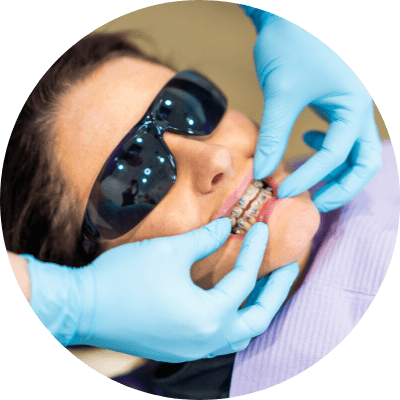
Atlanta’s Elizabeth Stearns got her braces at age 32. She wanted to fix a crossbite — when teeth don’t align as they should. Mostly, though, she wanted to feel better about her smile. After checking out her choices, she went for it and called an orthodontist, a type of dentist specialising in braces.
Bracing Yourself for Treatment
- Make time for checkups. “I usually see people every 4 to 6 weeks,” Will says. “Sometimes adults get very busy, but they have to be willing to come.”
- Watch what you eat. “It’s important to be really careful around hard or sticky foods, so you don’t break off the brackets,” she says.
- Brush and floss longer than before. “Hygiene is going to be more difficult with the appliances on their teeth,” she says.
Questions to Ask Your Orthodontist
You’re going to see them a lot over the course of your treatment, so find someone you’re comfortable with.
Here are few things to find out on your first visit:
- What options will work for my teeth?
- How long will I wear them?
- How do I take care of my teeth while they’re on?
- How often will I need to come in for an office visit?
- How much will they cost?
- Does your office offer payment plans?
- Do you accept my insurance?
- What happens after I get them off?
Lining Up Your Options
Ask about getting braces on the back of your teeth instead of the front to hide the metal brackets.
Clear aligners: You can skip the wires and brackets with these see-through plastic trays that fit over your teeth. You can take them out to eat, brush, and floss. The downside: They’re not stuck to your teeth, and they’re easy to lose.
They’re really meant to shift teeth around, Wadhwa says. If you need to close a big gap between teeth, metal braces are the better choice.
Veneers: These thin, tooth-coloured layers of porcelain go on top of your existing choppers. They’re a way to fix small, chipped, dull, or stained teeth.
“Veneers are the quick way to make your smile look better without moving your teeth,” Wadhwa says. But they also may come at a cost. In some instances, your dentist may shave off part of your original tooth before he puts them on.
After Treatment
Cleaning your teeth may get easier once your teeth are straighter, but that’s not your cue to slack off, says Adityah Chhibber, assistant professor of dental medicine at the Columbia University Medical Center.
“Most people think their crowded teeth are the reason they have periodontal disease,” Chhibber says. “They think once they have straight teeth, they won’t have those problems any more, but the evidence doesn’t support that.”
Bottom line: if you don’t do a good job cleaning your teeth now, braces won’t fix that. So brush up — whether you have them or not. The more you work at it, the easier it becomes to get them clean.
When to Straighten and When to Wait
To read the original article, click here.
Author: Rachel Reiff Ellis
Note: All content and media on the Bacchus Marsh Dental House website and social media channels are created and published online for informational purposes only. It is not intended to be a substitute for professional medical advice and should not be relied on as health or personal advice.
Services we mentioned:

More Dental Articles
The Rise And Rise of Living Costs Are Stopping Us Going To The Dentist
Since at least 2019, we seem to be moving from one global crisis to another; we suffer one disturbance and shock after another. We do indeed, live in interesting times. So interesting in fact, that it’s not so much Confucius but confusion around the origin of that...

Periodontal Analysis Benefits from Artificial Intelligence
Artificial Intelligence (AI) is on everybody’s’ lips. AI, it seems, will be the answer to every question and will, possibly, make every current situation better. Humanity has an abiding love affair with a technology, which is ultimately non-human. Perhaps, it speaks...

Dental Technology Can Save Coral Reefs
Such a provocative claim - that technology, and dental technology no less - can save the coral reefs we’ve been willingly killing since at least the 1960s. We are indeed adherents and addicts of the quick-fix-not-my-fault moral barcode of the day if we truly believe...

Why Do We Have Two Sets Of Teeth?
With the exception of mammals, most animals are polyphyodonts - that is they continually replace their teeth throughout their lives. Sharks have a tooth replacement process that works much like a conveyer belt from back to front. Crocodiles will renew each of their...