What Are the Different Types of Teeth Called?
What Are the Different Types of Teeth Called?
Your teeth are one of the strongest parts of your body. They’re made from proteins such as collagen, and minerals such as calcium. In addition to helping you chew through even the toughest foods, they also help you speak clearly.
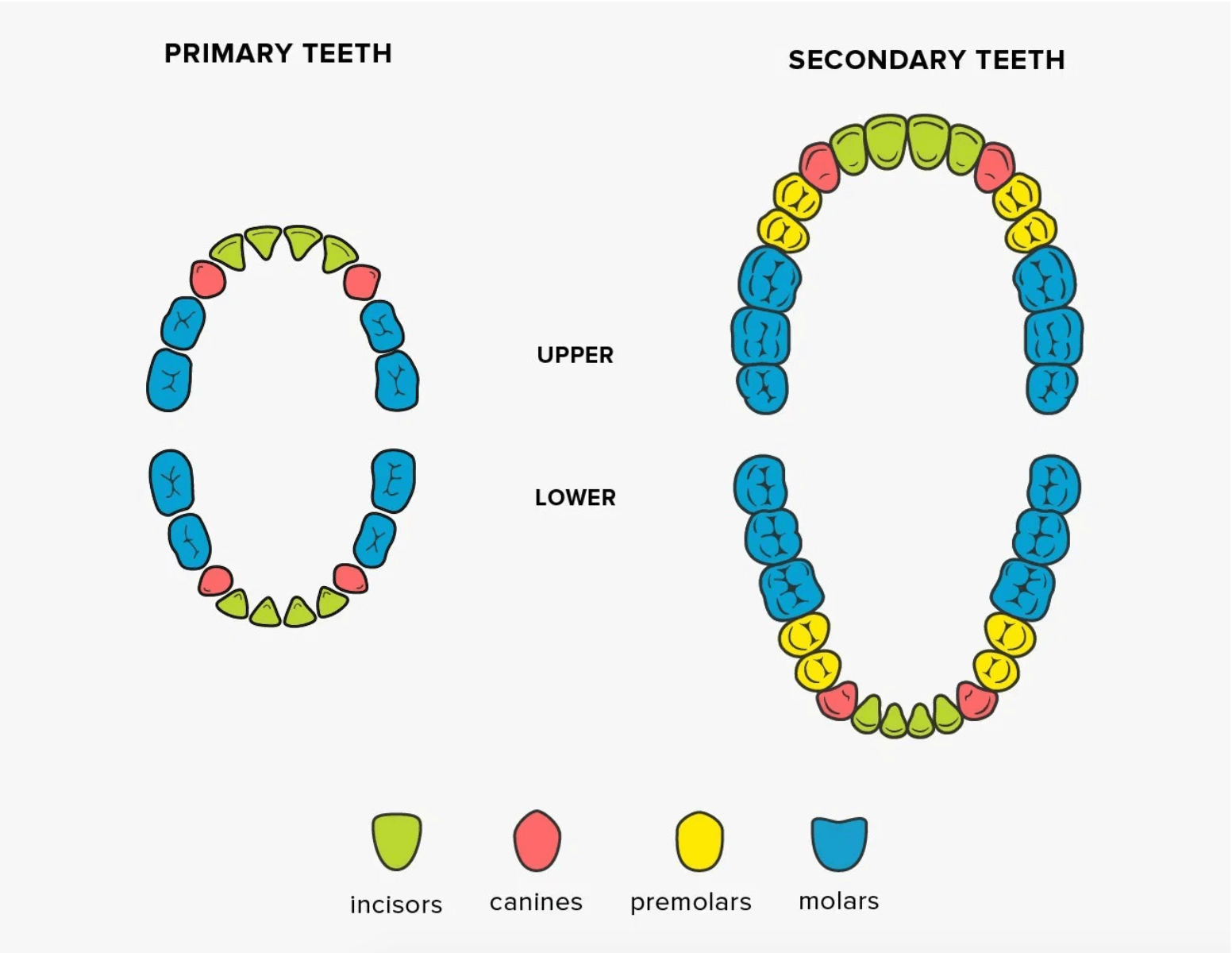
Most adults have 32 teeth, called permanent or secondary teeth:
- 8 incisors
- 4 canines, also called cuspids
- 8 premolars, also called bicuspid
- 12 molars, including 4 wisdom teeth
Children have just 20 teeth, called primary, temporary, or milk teeth. They include the same 10 teeth in the upper and lower jaw:
- 4 incisors
- 2 canines
- 4 molars
Primary teeth start to erupt through the gums when a baby is about 6 months old. The lower incisors are usually the first primary teeth to come in. Most kids have all 20 of their primary teeth by age 3.
Children tend to lose their primary teeth between the ages of 6 and 12. They’re then replaced by permanent teeth. Molars are usually the first permanent teeth to come in. Most people have all of their permanent teeth in place by age 21.
Keep reading to learn more about the different types of teeth, including their shape and function.
What are incisors?
Your eight incisor teeth are located in the front part of your mouth. You have four of them in your upper jaw and four in your lower jaw.
Incisors are shaped like small chisels. They have sharp edges that help you bite into food. Whenever you sink your teeth into something, such as an apple, you use your incisor teeth.
Incisors are usually the first set of teeth to erupt, appearing at about 6 months old. The adult set grows in between the ages of 6 and 8.
What are canines?
Your four canine teeth sit next to the incisors. You have two canines on the top of your mouth and two on the bottom.
Canines have a sharp, pointy surface for tearing food.
The first baby canines come in between the ages of 16 months and 20 months. The upper canines grow in first, followed by the lower canines.
Lower adult canines emerge in the opposite way. First, the lower canines poke through the gums around age 9, then the upper canines come in at age 11 or 12.
What are premolars?
Your eight premolars sit next to your canines. There are four premolars on top, and four on the bottom.
Premolars are bigger than canines and incisors. They have a flat surface with ridges for crushing and grinding food into smaller pieces to make it easier to swallow.
Baby molar teeth are replaced by adult premolars. Infants and young children don’t have premolars because these teeth don’t start to come in until around age 10.
What are molars?
Your 12 molars are your biggest and strongest teeth. You have six on the top and six on the bottom. The main eight molars are sometimes divided into your 6-year and 12-year molars, based on when they typically grow in.
The large surface area of your molars helps them grind up food. When you eat, your tongue pushes food to the back of your mouth. Then, your molars break up the food into pieces small enough for you to swallow.
The molars include four wisdom teeth, which are the last set of teeth to come in. They usually come in between the ages of 17 and 25. Wisdom teeth are also called third molars.
Not everyone has enough room in their mouth for this last group of teeth. Sometimes, the wisdom teeth are impacted, meaning they’re stuck under the gums. This means they don’t have space to grow in. If you don’t have room for your wisdom teeth, you’ll likely have to have them removed.
The bottom line
Your 32 teeth are essential for biting and grinding up food. You also need your teeth to help you speak clearly. While your teeth are solidly built, they won’t last a lifetime unless you take good care of them.
To keep your teeth in good shape, floss and brush regularly, and follow up with professional dental cleanings every six months.
Note: All content and media on the Bacchus Marsh Dental House website and social media channels are created and published online for informational purposes only. It is not intended to be a substitute for professional medical advice and should not be relied on as health or personal advice.
Services Mentioned

More Dental Articles

Dentists with Payment Plans in Bacchus Marsh: Making Care Affordable
Which dentist offers payment plans in Bacchus Marsh VIC? Bacchus Marsh Dental House offers flexible in-house payment plans that let you spread treatment costs over manageable instalments. We also accept all health funds with on-the-spot HICAPS claims, allowing you to...

Emergency Dental Care Tonight in Bacchus Marsh: What You Need Right Now
Where can I get emergency dental care tonight in Bacchus Marsh? Contact Bacchus Marsh Dental House for emergency guidance. During business hours (Mon-Fri 8am-6pm, Sat 8am-1pm), we prioritise emergencies same-day. After hours, contact us for instructions. For...

Top-Rated Dental Clinics Near Darley VIC: What Actually Matters
What are the top-rated dental clinics near Darley VIC? Bacchus Marsh Dental House, just minutes from Darley, has served families for nearly 40 years with 39,000+ patients trusting us. We're experienced in dental anxiety care, offer in-house general anaesthesia, and...

Which Dentist in Bacchus Marsh Bulk Bills? Here’s the Reality
Which dentist in Bacchus Marsh bulk bills? Dental care isn't typically covered by Medicare for adults, so true bulk billing (paying nothing) is rare. However, children aged 2-17 may access bulk billing through the Child Dental Benefits Schedule if eligible. For...