Here’s a question that surprises many patients: Invisalign isn’t just about straightening crooked teeth anymore. Modern Invisalign bite correction can address many overbite and underbite problems that previously required traditional braces or even surgery.
But here’s what most people don’t realise – not every bite problem is suitable for Invisalign treatment. The key is understanding which bite issues respond well to clear aligner therapy and which ones need different approaches.
At Bacchus Marsh Dental House, we regularly help patients in Bacchus Marsh, Melton, and Ballan determine whether Invisalign bite correction is right for their specific situation. The answer often depends on the severity of the problem and your individual treatment goals.
Understanding Overbites and Underbites
What Actually Constitutes a Bite Problem
An overbite occurs when your upper teeth extend too far over your lower teeth when you bite down. A small overbite is normal, but when it’s excessive, it can cause wear problems, speech issues, and aesthetic concerns.
An underbite is the opposite – your lower teeth protrude beyond your upper teeth when biting. This can affect chewing function, cause jaw strain, and create facial asymmetry.
Both conditions can range from mild to severe, and this severity largely determines whether Invisalign bite correction is a viable option.
The Functional Impact
Bite problems aren’t just cosmetic issues. Overbites can cause excessive wear on lower teeth and increase the risk of front tooth trauma. Underbites often create inefficient chewing patterns and can lead to jaw joint problems over time.
Many patients don’t realise their headaches, jaw pain, or tooth wear might be related to their bite until we evaluate their tooth relationships during consultation.
How Invisalign Bite Correction Actually Works
The Science Behind Movement
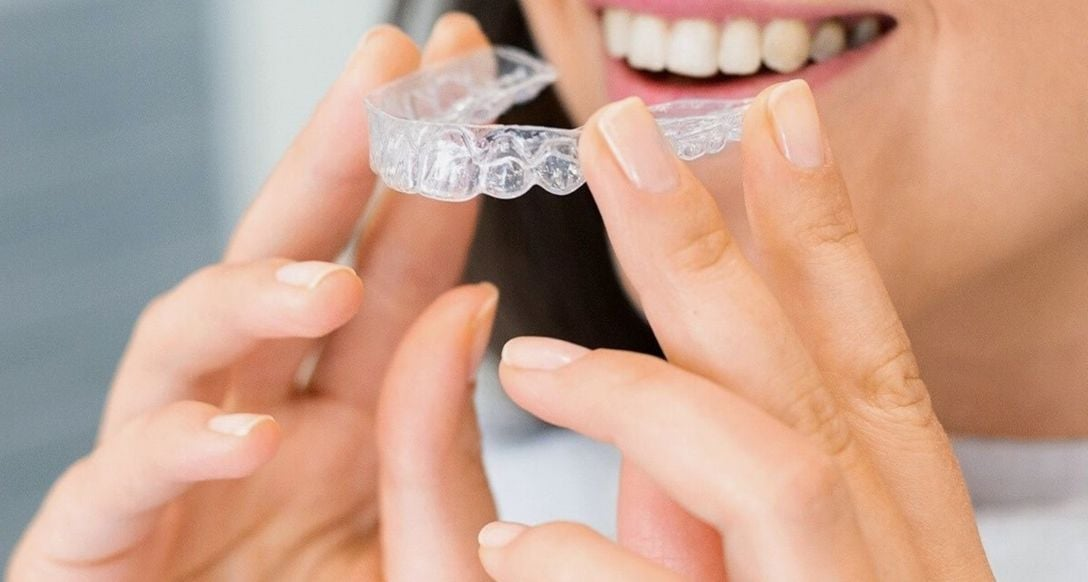
Invisalign bite correction works by applying controlled forces to gradually move teeth into better positions. Each aligner in your series creates specific movements designed to improve both tooth alignment and bite relationships.
For overbites, treatment typically involves moving upper teeth backward, lower teeth forward, or a combination of both movements. The aligners can also intrude overerupted teeth or extrude undererupted ones to create better vertical relationships.
Underbite correction often requires moving lower teeth backward or upper teeth forward, depending on which jaw is causing the problem.
Advanced Features for Complex Cases
Modern Invisalign treatment includes attachments – small tooth-coloured bumps bonded to specific teeth that help the aligners grip and move teeth more effectively. These attachments are crucial for achieving the complex movements required for bite correction.
Interproximal reduction (IPR) – carefully removing tiny amounts of enamel between teeth – can create space for movement without extractions. Elastics can also be used with Invisalign to help correct bite relationships.
What Invisalign Can Effectively Treat
Mild to Moderate Overbites
Invisalign bite correction works well for overbites caused by tooth position rather than jaw size discrepancies. If your overbite is primarily due to upper teeth being too far forward or lower teeth being too far back, Invisalign can often create significant improvement.
Success rates for mild to moderate overbite correction with Invisalign are quite high, often achieving results comparable to traditional braces.
Certain Types of Underbites
Dental underbites – where the problem is tooth position rather than jaw position – often respond well to Invisalign treatment. If your underbite is caused by lower teeth being too far forward or upper teeth being too far back, clear aligners can be very effective.
The key distinction is whether the problem is dental (tooth position) or skeletal (jaw position). Dental problems typically respond better to Invisalign bite correction.
Open Bites and Deep Bites
Invisalign can also address open bites (where front teeth don’t touch when back teeth are together) and deep bites (where upper teeth cover too much of the lower teeth). These conditions often respond well to clear aligner therapy.
When Invisalign Isn’t the Best Choice
Severe Skeletal Discrepancies
When bite problems result from significant differences in jaw size or position, Invisalign bite correction has limitations. Severe underbites caused by an overgrown lower jaw or undergrown upper jaw typically require surgical intervention.
Similarly, severe overbites caused by jaw size discrepancies often need traditional orthodontics combined with orthognathic surgery for optimal results.
Complex Rotations and Movements
Certain tooth movements are challenging with clear aligners. Severe rotations, especially of round roots like canines, can be difficult to achieve predictably with Invisalign alone.
Multiple extractions cases or treatments requiring significant root movement might also be better suited to traditional braces.
Patient Compliance Factors
Invisalign bite correction requires excellent patient compliance – wearing aligners 20-22 hours daily and following all instructions. Patients who can’t commit to this level of compliance often achieve better results with fixed appliances.
The Treatment Process for Bite Correction
Comprehensive Planning Phase
Invisalign bite correction begins with detailed analysis using 3D scanning and specialised software. We can show you a predicted outcome before treatment begins, helping you understand what’s possible with your specific case.
The planning phase is crucial for bite correction cases, as we need to carefully coordinate tooth movements to achieve proper functional relationships, not just straight teeth.
Treatment Timeline Expectations
Bite correction with Invisalign typically takes longer than simple alignment cases. Expect 12-24 months for most bite problems, depending on complexity and how well your teeth respond to movement.
Some cases require refinement aligners to fine-tune the bite relationships after the initial series. This is normal and helps achieve optimal functional results.
Monitoring and Adjustments
Regular check-ups every 6-8 weeks allow us to monitor progress and make adjustments as needed. Sometimes treatment plans need modification based on how your teeth actually move versus the predicted movement.
Success Rates and Realistic Expectations
What the Research Shows
Studies indicate that Invisalign bite correction achieves successful outcomes in 70-85% of appropriate cases. Success rates are highest for mild to moderate dental bite problems and lower for severe skeletal issues.
The key is proper case selection – choosing patients whose bite problems fall within Invisalign’s capabilities.
Factors Affecting Success
Patient compliance is the biggest factor affecting Invisalign bite correction success. Wearing aligners as directed, using elastics if prescribed, and attending all appointments significantly impact outcomes.
Starting age also matters. Adult teeth move more slowly than children’s teeth, potentially affecting treatment duration and final results.
Making the Right Decision
Assessment Questions
During your consultation, we’ll evaluate:
- The severity and type of your bite problem
- Whether it’s primarily dental or skeletal in nature
- Your compliance expectations and lifestyle factors
- Your specific treatment goals and timeline preferences
Alternative Approaches
If Invisalign isn’t ideal for your bite correction needs, alternatives include traditional braces, which can handle more complex movements, or surgical orthodontics for severe skeletal problems.
The goal is always to recommend the treatment approach most likely to achieve your desired outcome efficiently and predictably.
The Bottom Line on Invisalign Bite Correction
Invisalign can effectively correct many overbite and underbite problems, particularly those caused by tooth position rather than jaw size issues. The key is proper evaluation to determine whether your specific case falls within clear aligner capabilities.
At Bacchus Marsh Dental House, we specialise in comprehensive orthodontic evaluation and will give you honest advice about whether Invisalign is your best option or if alternative treatments might serve you better.
Curious whether Invisalign can address your bite concerns? Contact Bacchus Marsh Dental House today at (03) 5315 2777 to schedule your comprehensive orthodontic consultation. We’ll assess your specific situation and explain all your bite correction options.
Frequently Asked Questions
How long does Invisalign bite correction typically take?
Bite correction with Invisalign usually takes 12-24 months, depending on the complexity of your case and how well your teeth respond to movement. This is generally longer than simple alignment cases, as moving teeth to correct bite relationships requires more precise, coordinated movements.
Will I need to wear elastics with my Invisalign for bite correction?
Many bite correction cases do require elastics (rubber bands) to help achieve proper jaw relationships. These are typically worn with small attachments on your teeth and are an important part of successful Invisalign bite correction treatment.
Can Invisalign fix severe overbites or underbites?
Invisalign works best for mild to moderate bite problems caused by tooth position rather than jaw size issues. Severe skeletal bite problems often require traditional braces combined with orthognathic surgery for optimal results. We’ll assess whether your specific case is suitable for Invisalign during consultation.
Note: All content and media on the Bacchus Marsh Dental House website and social media channels are created and published online for informational purposes only. It is not intended to be a substitute for professional medical advice and should not be relied on as health or personal advice.